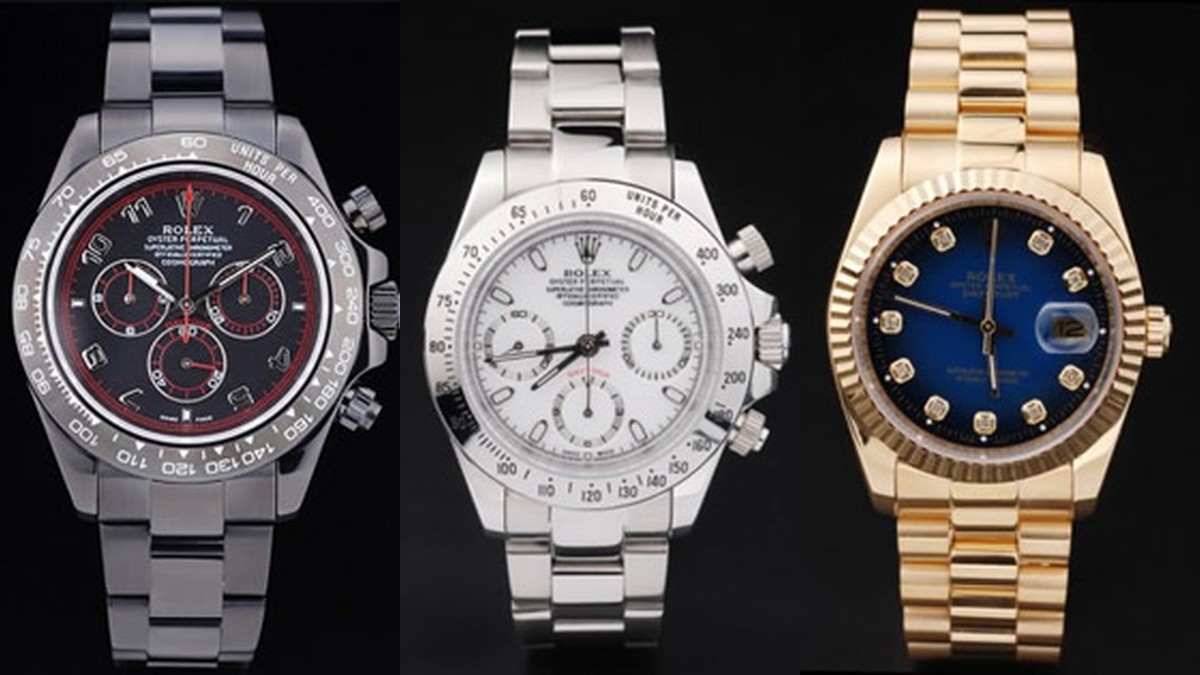
Marketing tiers are not measurements
Replica-watch sellers use tier names because they are easy to understand, but there is no universal body defining what AAA or 1:1 must contain. Two watches carrying the same label can come from different factories, use different movements and have different QC. A useful quality guide therefore needs a repeatable scoring method rather than a vocabulary list.
A ten-point workshop score
| Area | Points | What earns the points |
|---|---|---|
| Reference accuracy | 10 | Correct model, generation, size and configuration |
| Case geometry | 10 | Diameter, thickness, lugs and crown placement are proportionate |
| Dial & hands | 10 | Printing, marker alignment and hand lengths are consistent |
| Bezel & crystal | 10 | Shape, engraving, insert and Cyclops fit the reference |
| Bracelet & clasp | 10 | End-link fit, taper, articulation and operation are clean |
| Movement identity | 10 | Calibre is accurately disclosed |
| Movement function | 10 | All advertised complications operate correctly |
| Timekeeping | 10 | Stable rate and acceptable amplitude/beat error for the calibre |
| Water-test evidence | 10 | Recent pressure result where water use is claimed |
| Individual QC | 10 | Clear photos/video of the actual watch before shipment |
This score is intentionally model-neutral. A Daytona can lose movement-function points for a non-working chronograph; a Datejust can lose dial/bezel points for an off-center Cyclops; a Submariner can lose water-test points when depth resistance is only advertised rather than tested.
A high score can still hide one bad compromise
A total score is useful for structure, but do not hide critical failures inside an average. A Daytona with perfect finishing but broken chronograph function has a major defect. A Submariner intended for swimming without a pressure test has an unresolved risk. Decide which categories are non-negotiable for your use before adding the points.
Looks good is not the same as works well
Some buyers prioritize appearance and accept a generic movement. Others would rather have a proven movement even if internal architecture differs from Rolex. Neither choice is automatically wrong; the problem is when the listing obscures the trade-off. Separate visual accuracy, mechanical function and serviceability in your decision.
Price is the weakest shortcut
Fixed price bands are a poor way to classify replica quality because the same price can cover very different movements, cases and finishing. Higher cost can reflect better machining or movement choice, but it can also reflect marketing, seller margin or scarcity. Use the score above first and price second.
Using the score without pretending it is science
Before shipment, mark each category as verified, unresolved or failed. Do not give full points because a seller says “best quality.” If a category cannot be checked, record it as unresolved. This prevents attractive product photography from silently turning unknowns into assumed strengths.
Turn the 10-point score into a weighted score when your priorities differ
The equal 10-point categories are a neutral starting point, but a diver, chronograph buyer and occasional dress-watch wearer do not value the same risks. A Submariner buyer who swims may weight pressure testing more heavily. A Daytona buyer should weight chronograph function and case thickness. A Lady-Datejust buyer may care more about dial, gem setting and bracelet comfort.
Write those priorities before comparing products. Otherwise the most visually impressive seller presentation tends to change the weighting unconsciously.
Factory reputation is a clue, not a substitute for QC
Replica communities often discuss factory names as if every unit is identical. Batch revisions, component substitutions and individual assembly variation mean factory reputation can guide a shortlist but should not replace unit-level inspection. Even a strong production run can contain a misaligned marker or damaged clasp.
Why macro photography can make quality judgments worse
Macro images are useful for printing and dust, but they magnify tiny differences far beyond normal wrist viewing. Judge a watch twice: once at realistic viewing size for overall proportion, then under magnification for finishing. This prevents a microscopic printing flaw from overshadowing an obviously incorrect case profile—or vice versa.
Quality after six months is different from quality on day one
Long-term quality includes movement stability, crown threading, bracelet stretch, coating wear and clasp durability. Some of those cannot be known during purchase, which is why serviceability and seller after-sales policy belong in a serious evaluation. A high initial visual score should not be confused with proven long-term durability.
Use “unresolved” as a real result
If the seller cannot prove steel grade, water resistance or movement identity, mark the category unresolved. Do not convert missing evidence into a zero if the claim may be true, but do not convert it into full points either. This simple three-state approach—verified, failed, unresolved—makes the score more honest.
The scoring method also helps expose marketing trade-offs. A watch may score 9/10 for external accuracy but 5/10 for movement disclosure because the seller will not identify the calibre. Another may score 7/10 visually but 9/10 mechanically because it uses a known movement with excellent function. Neither is universally “better”; the score shows what the buyer is paying for.
When comparing factories or batches, record dates. Replica production changes quickly, and a review from one year may describe a different dial, movement or bracelet from a current batch sold under the same factory nickname. Fresh QC evidence should outrank reputation when the two conflict.
Also distinguish defect severity. Dust under the crystal, a non-resetting chronograph and a slightly uneven rehaut engraving should not all carry the same penalty. Define critical defects—wrong model, failed function, major alignment, damaged coating, unsafe crown or clasp—separately from cosmetic imperfections. This keeps the score practical.
A final quality score should never be presented as a promise that a watch is indistinguishable from genuine. It is a structured way to compare replica construction within the category, using evidence available to the buyer.
Use the score as a record rather than a badge. Save the score next to the QC images and note the date, seller and claimed factory or batch. If a later version changes movement, bezel or bracelet, create a new record instead of assuming the old score still applies. This makes comparisons more useful over time and prevents reputation from substituting for current evidence.
The useful part of a quality score is the record it leaves behind. A reader can see how the conclusion was reached and reuse the same method on a later batch, a different factory or a completely different model.