A good buying decision begins before the seller conversation
Older replica-watch sites often used absolute claims: “exact copy,” “cannot be detected,” “guaranteed waterproof” or “guaranteed to pass customs.” Those statements are not useful buying information because they turn uncertain outcomes into promises. A better process identifies the exact watch, checks what can be verified before payment and documents seller terms.
First, identify the watch you actually want
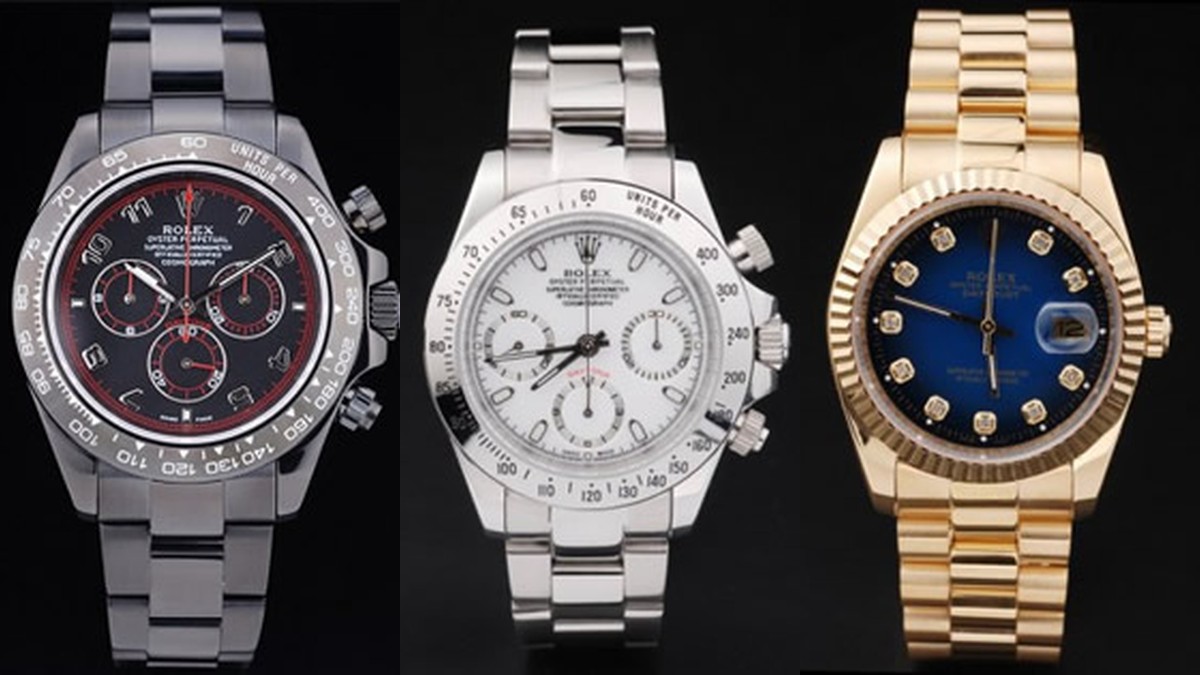
Do not begin with “I want the best Rolex replica.” Begin with model, size, dial, bezel, bracelet and material configuration. A Datejust 36 on Jubilee should be compared to the corresponding genuine reference, not to a Datejust 41 on Oyster. A Daytona with ceramic bezel should not be QC’d against an older metal-bezel generation.
Then ask what is inside it
Request the calibre name, not only “Swiss,” “Japanese” or “clone.” Then ask whether all visible complications are functional. On a Daytona, verify chronograph operation. On a Day-Date, verify day and date. On a simple Datejust, focus on date position, quick-set behavior and serviceability.
See the watch that will be shipped
Catalogue images show what a product line is supposed to look like; they do not show the exact unit being shipped. Ask for front, side, clasp and caseback photos plus a short function video if the seller offers QC. The goal is not forensic authentication; it is to catch misalignment, scratches, function failures and configuration mistakes before shipment.
Read the exit route before entering
Clarify the inspection window, conditions for return, who pays shipping, and what happens if the watch arrives damaged or materially different from the order. Save the written terms. A seller with strong product photography but vague after-sales terms creates a different kind of risk.
Shipping quality and watch quality are different subjects
Tracking, insurance and delivery estimates matter, but they do not prove the quality of the watch. Likewise, no seller can responsibly promise that a parcel will never be delayed, inspected or affected by local law. Buyers should understand the legal and customs rules that apply in their own jurisdiction.
A few red flags are enough
- Movement described only by marketing grade.
- Genuine Rolex specifications copied directly onto the replica without testing.
- No willingness to show the individual watch.
- Chronograph or calendar function not demonstrated.
- Material claims treated as obvious from appearance.
- Return terms that are missing or change after payment.
- Pressure resistance claimed without an individual test.
What matters after delivery
Inspect the watch before removing protective films where possible. Confirm the model configuration, operate the crown and complications, check bracelet/clasp, observe timekeeping and document any obvious defect promptly. For water use, obtain a pressure test from a competent watchmaker even if the seller provided a factory result.
Compare sellers with the same evidence request
If every seller receives a different set of questions, the comparison becomes biased. Send the same short evidence request: exact model/reference, movement calibre, individual front/side/clasp photos, complication video where relevant, timekeeping snapshot if available, pressure test if required, and written return terms. The seller who answers clearly is easier to evaluate than one who responds only with tier labels.
Payment protection and documentation
Before paying, understand what dispute or chargeback protections exist for the payment method you choose and what evidence would be required. Keep order confirmation, product description, QC approval and shipping information together. This is ordinary ecommerce discipline, not a substitute for checking the legal status of the product in your jurisdiction.
Do not let urgency replace QC
Limited-stock messages, countdowns and promises of immediate shipping can pressure buyers to skip verification. If model accuracy matters, a short delay for QC is usually more valuable than receiving the wrong configuration quickly. Decide in advance which checks you will not waive.
When a cheaper version can be the better buy
A lower-priced watch with a known, serviceable movement and honest description can be a better fit than a higher-priced model whose premium is mostly decorative. This is especially true for closed-caseback three-hand watches where internal visual similarity is rarely seen. Match spending to the qualities you actually value.
After-sales support belongs in the buying decision
Ask what happens if the movement fails in the first weeks, a coating arrives damaged, or the watch differs from approved QC. A seller’s solution—repair, replacement, parts, return—can materially affect total ownership cost. Product quality and after-sales policy should be scored separately, then considered together.
Build a comparison sheet if you are considering more than one seller. Use columns for exact reference, movement, case material claim, crystal, bracelet, QC availability, return policy, shipping method and total price. This prevents one memorable feature—such as a Swiss movement or dramatic dial—from dominating the decision while other categories remain unknown.
Ask whether QC photos are taken before or after the watch is fully prepared for shipment. Protective films can hide small scratches, while aggressive removal can make a return more difficult. Clarify the seller’s inspection expectations so you know what can be checked on arrival without affecting return eligibility.
For movements with setting restrictions, request basic instructions. Many mechanical calendars should not be quick-set during the hours when the calendar mechanism is engaged. The exact restricted period varies by movement. Following the correct movement guidance reduces the chance of damaging the watch immediately after delivery.
Finally, set a maximum acceptable uncertainty. If the seller cannot verify a claim that is critical to you—full chronograph function, a particular movement, pressure testing, or a specific dial configuration—do not let a lower price or faster shipping turn that unknown into an assumption.
Model-specific buying priorities should be written down before browsing. For a Daytona, require a functional chronograph demonstration. For a Submariner intended for water, require pressure-test evidence. For a Datejust, insist on clear date/Cyclops photos. For a Day-Date, request multiple weekday/date values. This reduces the chance that a seller’s strongest marketing point changes what you originally cared about.
After choosing a watch, keep the approved configuration and QC images in one folder. If a replacement is later offered, repeat the same checks rather than accepting “same model” as proof that the replacement is equivalent. Small batch differences can matter.