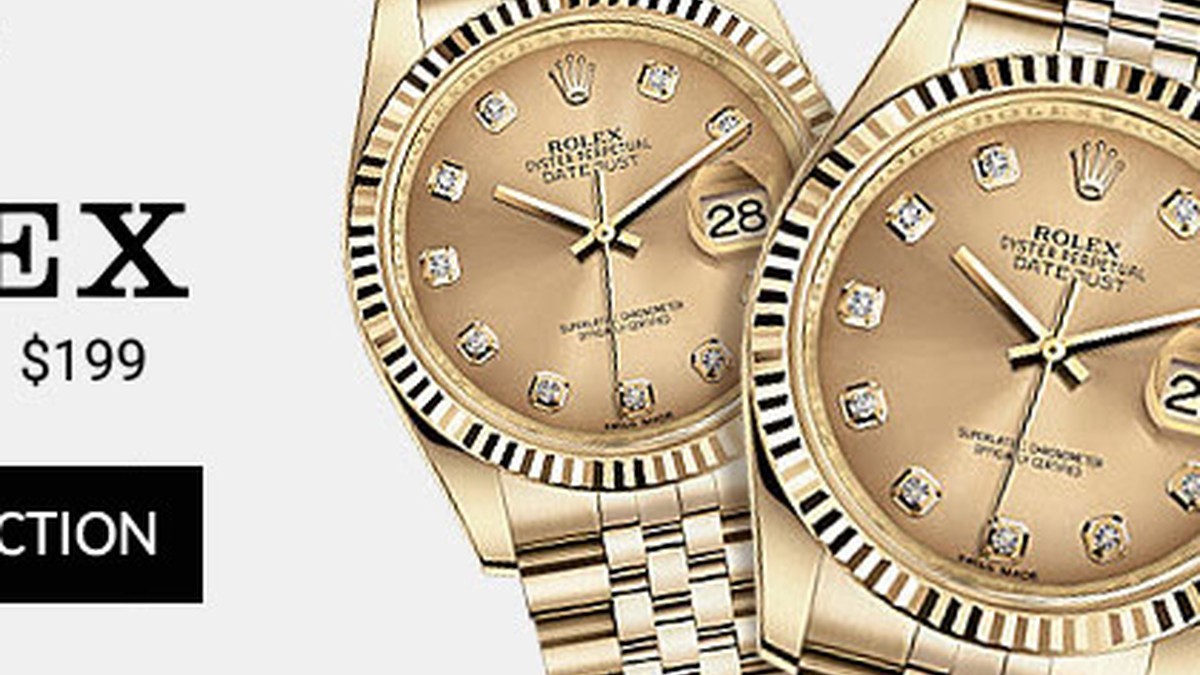
The 2015 Lady-Datejust 28 update remains a useful reference point
Rolex introduced the 28 mm Lady-Datejust generation in 2015, and the current family continues to use a 28 mm Oyster case. That small diameter makes the model especially sensitive to proportion, dial spacing and bracelet scale. Current reference 279171, for example, combines Oystersteel and Everose gold, a fluted bezel, Cyclops date display and calibre 2236 on the genuine watch.
Dial choices, diamond markers and bracelet variations are precisely the areas where a small replica can succeed or fail visually, because the compact case leaves little room for misalignment.
28 mm proportions are less forgiving than larger Datejust cases
In a small watch, a fractionally oversized marker, thick bezel or poorly centered date can change the entire impression. Start with the dial opening and bezel-to-dial ratio. Then check how the lugs flow into the bracelet. Product photos taken at an angle can hide an overly thick case, so request a side profile as well.
The current genuine Lady-Datejust 28 uses calibre 2236 and has approximately 55 hours of power reserve. Replica versions may use different movements, and their thickness can influence the case profile. A practical movement that fits the case cleanly can be preferable to a decorated movement that forces incorrect proportions.
Chocolate, mother-of-pearl and diamond dials need different QC
Chocolate dials and diamond hour markers deserve separate inspection. Dark sunburst dials should show even finishing as the watch is rotated under light. Mother-of-pearl varies naturally in appearance, so consistency of marker placement is more useful than expecting every surface to match a catalogue photograph. Diamond-set dials should be checked for even seating and alignment.
Do not let a decorative dial distract from the date window. The Cyclops and date remain among the easiest model-specific details to inspect on a Lady-Datejust.
Oyster, Jubilee and Pearlmaster-style bracelets
Rolex’s Lady-Datejust is available with classic Oyster and Jubilee bracelet options depending on reference. Older Pearlmaster material appeared in the original article as well. Pearlmaster became known for its rounded multi-piece links and jewelry-oriented presentation, but it should not be confused with every modern Lady-Datejust configuration.
On a replica, check link articulation, edge finishing, clasp fit and the transition from end link to case. Small bracelets can feel sharp or rigid when machining is poor, even if they look acceptable in front-facing photos.
Calibre 2236 claims and practical alternatives
If a seller advertises a “2236 clone,” ask what that term means in practice. Does the movement actually share architecture with Rolex calibre 2236, or is it a generic automatic movement with decoration? Does it have the advertised power reserve and quick-set date? Can it be serviced or replaced?
Since the caseback is closed, the wearer usually experiences the movement through winding, crown feel, timekeeping and date behavior. Those functional qualities deserve at least as much attention as visual decoration on a hidden rotor.
Lady-Datejust 28 QC checklist
- Confirm 28 mm case size and the exact dial/bezel/bracelet combination.
- Use a straight-on image to check marker and date-window alignment.
- Inspect Cyclops position and several date numerals.
- Check gem setting for consistent height and spacing where applicable.
- Request a side profile to judge thickness and crystal height.
- Check bracelet end links, clasp action and sharp edges.
- Verify quick-set date, hand setting and the actual movement installed.
- Do not inherit the genuine 100 m rating without an individual pressure test.
Do not confuse Lady-Datejust with older Pearlmaster references
The original article discussed Pearlmaster alongside Lady-Datejust because both sit in Rolex’s jewelry-oriented women’s history. They should not be treated as the same current model. Pearlmaster had its own bracelet architecture and case treatments. A present-day Lady-Datejust 28 replica should be evaluated against a corresponding Lady-Datejust reference unless the seller specifically identifies an older Pearlmaster design.
This distinction prevents a common content mistake: using attractive historical details to justify features that do not belong on the watch being sold.
Small dials amplify printing and marker errors
On a 28 mm dial, the Rolex coronet, text blocks, date aperture and hour markers occupy a tighter space than on a 36 or 41 mm watch. Thick printing or oversized markers can make the dial feel crowded even when each element looks acceptable individually. Review the entire dial at normal size before relying on macro photographs.
Gem-set markers add another variable. Check that stones are level and consistently oriented and that settings do not intrude into the minute track. Symmetry matters more than sparkle in QC images.
Bracelet sizing and comfort are part of quality
A small watch is often worn on a smaller wrist, so clasp length, removable links and end-link articulation matter. Ask how many links are supplied and whether screws or pins are used for sizing. A visually accurate bracelet that cannot be adjusted comfortably is a practical failure.
On coated or two-tone bracelets, sizing can also expose untreated metal around screw holes or link edges. Inspect those areas after adjustment if finish durability is important.
Timekeeping expectations should match the installed calibre
The genuine calibre 2236 standard should not be copied into a replica listing unless the replica actually uses that movement—which it generally does not. Evaluate timekeeping against the installed calibre’s realistic specification. A well-regulated generic automatic can be perfectly usable without meeting Rolex’s -2/+2 seconds-per-day Superlative Chronometer standard.
For comparison photographs, scale also matters. A 28 mm watch photographed close to the camera can appear almost as large as a 36 mm Datejust on screen. Ask for at least one wrist or ruler reference if the seller’s listing is ambiguous. This is particularly useful when multiple ladies’ case sizes share similar dial art.
Check the crown as a functional detail rather than only a logo detail. The crown should pull into distinct winding, date-setting and time-setting positions appropriate to the installed movement. On a small case, an overly long stem or oversized crown tube can make the crown sit too far from the case when closed. That affects both appearance and confidence in sealing.
Finally, distinguish jewelry finish from watchmaking function. A diamond bezel or elaborate dial can be visually attractive while masking a weak movement, rough crown action or poorly finished clasp. Review the watch once with attention to decorative details and a second time with the decoration mentally removed: case, date, movement, crown and bracelet should still stand on their own.